
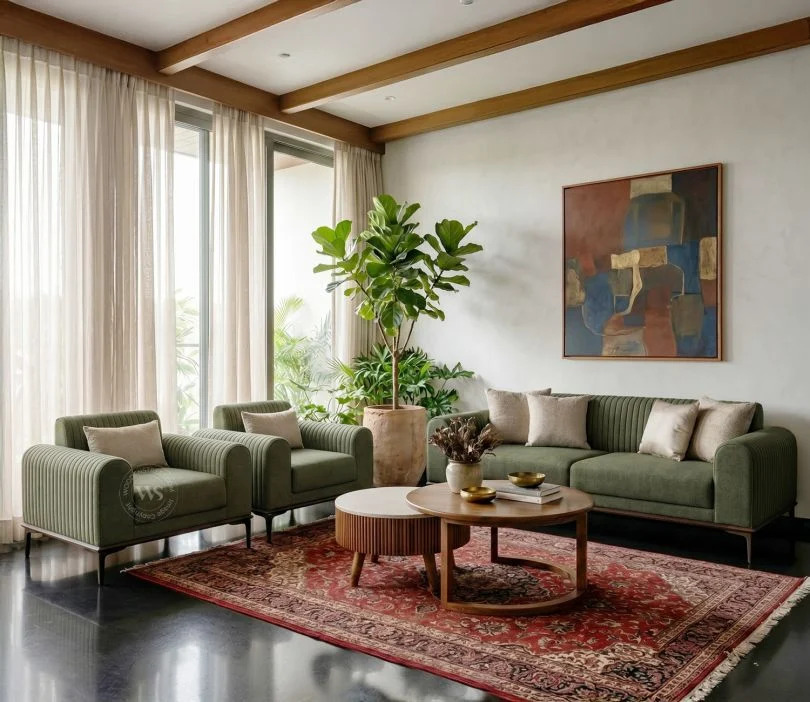

1. Persistent Structural Sagging and Loss of Support
The most definitive sign that a couch, armchair, or accent chair has reached the end of its useful lifespan is structural failure. Furniture manufacturers build seating pieces using internal frameworks made of kiln-dried wood, metal springs, or webbing designed to distribute weight evenly. Over years of sitting, lounging, and jumping, these internal support systems degrade.
-
Sinking Cushions: When you sit down and immediately sink toward the floor with little to no resistance, the high-density foam core inside the cushions has broken down permanently.
-
Sagging Frames: If the overall silhouette of the sofa appears warped, dips noticeably in the middle, or slopes toward one side, the internal wooden frame has likely cracked or weakened under stress.
-
Bottoming Out: Feeling wooden slats or metal springs press against your lower back or thighs when you sit means the upholstery suspension can no longer support body weight effectively.
2. Chronic Physical Discomfort, Aches, and Pains
Furniture is ultimately meant to provide ergonomic support. If you or your family members routinely stand up from the living room sofa with a stiff lower back, sore neck, or aching hips, your seating is no longer doing its job. Worn-out padding fails to maintain proper spinal alignment, forcing your muscles to work overtime while you relax.
Furthermore, old recliners and sofas that once offered plush lumbar support can develop uneven wear patterns that throw your posture out of alignment. If you find yourself constantly shifting positions, stacking multiple pillows behind your back, or avoiding your living room seating entirely in favor of kitchen or dining chairs, it is a clear biological indicator that your furniture needs an upgrade.
3. Persistent Musty Odors and Embedded Allergens
Fabric upholstery acts like a giant sponge over the years, absorbing pet dander, dust mites, spilled beverages, body oils, cooking odors, and everyday household dust. Even with regular vacuuming and professional steam cleaning, deeply embedded particles eventually become impossible to remove.
-
Allergic Reactions: If family members experience unexplained sneezing, watery eyes, or skin irritation whenever they sit on the living room couch, trapped allergens in old foam and fabric are frequently to blame.
-
Trapped Smells: Musty or sour odors that linger despite deep cleaning usually indicate that moisture has penetrated the internal padding or wooden frame, leading to mold and mildew growth that cannot be remedied without full replacement.
4. Visible Fabric Damage, Tears, and Cosmetic Decay
While minor cosmetic blemishes can sometimes be hidden with decorative throw blankets or slipcovers, extensive surface damage signals that the materials have structurally degraded beyond simple repair. Leather begins to crack, peel, and flake away when the protective top finish wears off, while woven fabrics suffer from thinning threads, large rips, and frayed seams.
When armrests lose their fabric covering entirely, stuffing begins to poke out through tears, or wooden legs become loose and wobbly due to stripped screw holes, furniture loses its dignity. Leaving heavily damaged pieces in your main living area drags down the aesthetic appeal of your entire home, making the room look cluttered and unkempt rather than cozy and inviting.
5. Mismatched Styles and Evolving Household Needs
Sometimes furniture is mechanically sound and structurally intact, yet it no longer suits your current lifestyle or interior design preferences. Life changes rapidly, and a living room set purchased during your college years or apartment renting days rarely fits the functional demands of a growing family, a new home layout, or a matured design taste.
-
Family Evolution: If you now have young children or pets, delicate vintage fabrics and sharp glass-topped coffee tables present safety hazards that require durable, stain-resistant replacements.
-
Layout Shifts: Moving to a larger house or a home with an open-floor concept often means your old furniture pieces look disproportionately small or awkward in the new space, necessitating pieces scaled properly to the room dimensions.
Frequently Asked Questions
How long does a standard living room sofa typically last before needing replacement?
A well-constructed sofa featuring a solid hardwood frame and high-density foam cushions generally lasts anywhere from seven to fifteen years under normal daily use. Budget-friendly sofas built with particleboard frames and low-density foam often begin showing significant structural failure within three to five years.
Is it cheaper to reupholster an old sofa or buy a brand new one?
Professional reupholstering can often cost as much as or even more than purchasing a brand-new sofa, particularly once you factor in labor costs and high-end fabric yardage. Reupholstering is usually only financially worthwhile if the furniture features an exceptionally high-quality vintage hardwood frame or holds deep sentimental value.
What are the best upholstery fabrics for households with children and pets?
Performance fabrics like Crypton, microfiber, tightly woven canvas, and top-grain leather stand up remarkably well to heavy household traffic, resist staining, and clean easily compared to delicate silks, loose linens, or textured chenille that traps pet claws.
How can I test the structural integrity of a sofa before buying a replacement?
To test a sofa in a showroom, lift one front corner of the frame a few inches off the floor. If the other front leg stays on the ground for more than a couple of inches, the frame is weak and poorly constructed. Additionally, sit down firmly on the arms and back to ensure there is no creaking, shifting, or loose joinery.
Can sagging sofa cushions be fixed without buying a completely new couch?
Yes, if the internal frame is still strong and undamaged, you can often revive a sagging couch by replacing the old foam inserts with high-density foam cut to size, or by slipping a firm support board underneath the seat cushions to restore tension.
How do I dispose of heavy old living room furniture responsibly?
If your old furniture is still usable, consider donating it to local charitable organizations, listing it on community reuse networks, or giving it to a family in need. If the furniture is completely broken and unsalvageable, contact your local municipal waste management department to schedule a bulk trash pickup or rent a small disposal dumpster.
What furniture pieces should I invest in first when redecorating a living room?
Always anchor your living room redecorating project around the primary seating piece, which is usually the main sofa or sectional. Once you establish the scale, color, and layout of the primary sofa, you can easily select matching accent chairs, coffee tables, and media consoles to complete the space.
Comments are closed.